The distance between a powerful model and a tool people actually use is where nearly all the real work happens.
From raw capability to a single tap each layer exists so the one above it can ignore what sits below.
| 1 Raw model | predicts likely text |
| 2 Post-training | learns to follow intent |
| 3 The system | retrieval, memory, tools |
| 4 The interface | chat, defaults, scaffolding |
| 5 Everyday tool | one tap, no manual |
The same capability that needs a rack of expensive chips, a carefully worded prompt, and someone who knows what they are doing to produce anything useful becomes, one layer up, a thing a ten-year-old operates by pointing a phone at a sign.
That gap is the interesting part. The headline story about artificial intelligence is usually the raw power of the models, but the more revealing story is the opposite one: how all that power is made to disappear, until what is left is a button that does something ordinary.
This piece follows one everyday task down the assembly line that turns a raw model into a tool. The single idea underneath every section is simple enough to state now the model is the ingredient, not the meal. Almost everything that makes a model usable is built on top of it, in layers, each one hiding the mess of the one below.
What a model actually is, and why it isn’t a tool yet
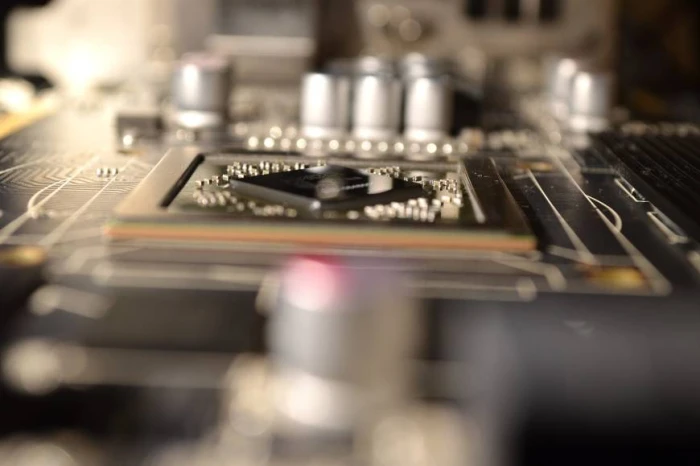
Strip away the branding and a trained model is a prediction engine. Given a stretch of text or a grid of pixels it estimates what most plausibly comes next, one small piece at a time. That single act, repeated at speed, is the whole of its native behaviour.
This is powerful and, on its own, nearly useless. A raw model has no goals and no idea it is meant to be helpful; it will continue a falsehood as fluently as a fact, answer the same question two different ways, and demand an enormous amount of computation to do either. It predicts; it does not intend.
The point worth holding onto is that raw capability and everyday usefulness are almost unrelated qualities. A more capable model does not automatically make a better product, which is exactly why the rest of the stack exists. Point one at a photographed menu and, in principle, it could describe the dishes but what comes out is a lab demonstration, not something a traveller would trust at a table.
From prediction to intention
The first translation up the stack is teaching the predictor to take direction. This step is called post-training, and it is what separates a model that merely continues text from one that answers a request.
It happens in two broad moves. Instruction tuning shows the model many thousands of examples pairing a request with a good response, until “translate this menu” registers as a task to perform rather than a phrase to extend. Preference-based alignment then has the model produce several candidate answers and learns, from human rankings or a trained stand-in for them, which to prefer nudging it toward replies people actually find useful, and toward declining the harmful or nonsensical.
What changes here is behaviour, not knowledge. Post-training mostly rearranges how the model’s existing capability is expressed; it rarely teaches it new facts. That distinction returns later, because it explains why a fluent, well-behaved tool can still be confidently wrong about the world.
The system is the product
Here is the reframing the rest of the article leans on. The thing people call “an AI” is almost never just a model. It is a system, with the model as one component among several, and a surprising share of what feels like intelligence lives outside the model’s weights entirely.
The scaffolding around the model usually includes a few distinct pieces:
● Retrieval. A model doesn’t hold current or private information, so a retrieval layer looks up relevant documents at the moment a question is asked and hands them to the model to read. The accuracy of an answer often owes more to what was fetched than to how clever the model is.
● Memory. A bare predictor forgets everything the instant a turn ends. A memory layer stores earlier context and quietly feeds it back in, so the tool appears to remember a person across a conversation, or across months.
● Routing and orchestration. A controller decides which model should handle a given request, splits larger jobs into steps, calls other tools when needed, and stitches the pieces into a single reply the user sees as one smooth response.
The practical consequence is counterintuitive. Drop a smarter model into a badly built system and it still fails; wrap a merely decent model in a well-built system and it can feel remarkable. As raw models become interchangeable, the value keeps sliding toward this orchestration layer much as cloud computing turned raw servers into a commodity and moved the real advantage up into the software running on them.
The model is the ingredient. The system is the meal, the kitchen, and the waiter.
Cheap and fast enough to be “everyday”
A capability only becomes ordinary once it is cheap and quick enough to run millions of times a day without anyone watching the meter. Making that true is an engineering problem every bit as central as intelligence, and the progress on it has been startling.
The cost of a given level of capability has been falling roughly tenfold a year faster than the price of computing fell during the microchip boom. The concrete numbers are hard to believe at first glance:
| Capability level | Late 2022 | Recent |
| Mid-tier (GPT-3.5-class) | ~$20.00 | ~$0.07 |
| Frontier (original GPT-4-class) | ~$20.00 | ~$0.40 |
Three techniques do most of this work. Distillation trains a small “student” model to imitate a large “teacher” by learning from the teacher’s full output patterns rather than raw labels the method behind most of the fast, inexpensive “mini” and “lite” models, and behind open efforts like the distilled versions of DeepSeek’s reasoning model. Quantization stores the model’s numbers at lower precision four or eight bits instead of sixteen cutting memory and cost by well over half for a modest quality hit. Routing sends the easy majority of requests to a cheap small model and reserves the expensive one for the hard minority.
There is a twist worth noticing. Cheaper tokens did not shrink anyone’s bill; spending on these systems roughly doubled in a matter of months even as unit prices collapsed, because teams poured the savings straight back into longer prompts, deeper reasoning, and always-on features. The purpose of cheap inference was never to save money. It was to make constant, casual use affordable enough to feel free, which is the precondition for anything becoming everyday.
The interface is where capability becomes usable

A probability engine emits streams of text. A person needs something legible, and the interface is where the raw output is turned into doing far more quiet work than it is ever credited for.
Chat became the breakthrough interface not because it is sophisticated but because it needs no manual: anyone can type a sentence. Beneath that plain box sits a good deal of hidden scaffolding: a system prompt that sets the tool’s manner and rules, sensible defaults, formatting, worked examples; the user never sees all of it shaping the reply before the person has done anything but ask.
Good tools also practise a kind of progressive disclosure, keeping power out of sight until it is wanted: gentle defaults for the newcomer, depth for the expert who goes looking. With the menu, the traveller simply aims a camera and reads a translation back; the model selection, the prompt engineering, and the formatting are all sealed away. A large share of what gets praised as “this model is so good” is, on inspection, “this interface is so good.”
Grounding: giving the model hands and eyes
The next step up is the jump from talking about the world to acting in it. The mechanism is tool use, sometimes called function calling: the model is handed a set of actions it may invoke search the web, run a snippet of code, read a live database, call an external service and instead of guessing, it emits a structured request that the surrounding system carries out and feeds the result back.
This is where the menu task finally completes. The tool does not merely translate words it was handed; it calls a vision step to read the photograph, a translation step, perhaps a lookup for a dish nobody recognises, then assembles the pieces into a single answer. Chain enough of these calls toward a goal and the result is what everyone now means by an “agent.”
It is also where the difficulty rises sharply. Describing the world is forgiving; acting in it is not, because mistakes no longer sit harmlessly on a screen they compound. That jump in reliability is the subject the article keeps circling back to, and it comes due in full a few sections from here.
Guardrails and the deployable envelope
It is tempting to file safety under ethics and move on, but in this context it is better understood as plumbing. Raw capability is not something a company can safely hand to millions of strangers; constraints are precisely what make it handable.
The envelope around a shipped model is built from unglamorous parts: refusal behaviour for dangerous requests, evaluation suites run before every release, live monitoring of what the system does in the wild, rate limits, and defined fallback behaviour for when the model is unsure. None of it makes the model smarter. All of it makes the model shippable.
Seen this way, the constraints are not a brake on usefulness they are the condition for it. A capability that occasionally produces catastrophic output cannot be put in front of the public no matter how impressive its best moments are, a concern that a 2026 international panel of more than a hundred experts flagged as one of the field’s central unresolved problems. Constraint is the step that converts a lab result into a product.
The feedback flywheel
Once a tool is in daily use, that use quietly becomes the fuel for its next version. Every interaction is a signal: which answers earned approval, which conversations were abandoned halfway, where people rephrased the same request in visible frustration.
That stream does something no internal test can. Real use surfaces failures nobody thought to check for; those failures become new evaluations; the evaluations drive the next round of training and system tweaks. The loop is what separates tools that compound getting better precisely because they are used from ones that quietly stagnate after launch.
The same loop has a darker setting. Point it at the wrong signal and the tool optimises for that instead: if engagement is what gets measured, the system learns to be agreeable or compulsive rather than correct. It can also harden its own early mistakes, especially when later models are trained partly on the output of earlier ones, quietly turning a bug into house style.
The seamlessness tax
The better this whole stack works, the more completely it hides itself and that disappearance carries a cost that is easy to miss.
When a tool is fluent and instant, people slide into mistaking fluency for correctness. The very interface that makes the output usable also makes it persuasive, including in the moments it is wrong. A confident, cleanly formatted paragraph reads as true, and a smooth one reads as more true than a hesitant, hedged one that happens to be accurate.
Friction used to carry information. The effort of doing a task by hand was also how a person built the judgement to sense when something was off. Take the friction away entirely and that quiet calibration goes with it. A menu translation that is subtly wrong, one dish confidently mislabelled is harder to catch precisely because everything around it feels effortless and assured.
This is the seamlessness tax: the smoother the tool, the weaker the user’s ability to audit it, and the higher the stakes of whatever errors slip through unquestioned. Abstraction is never free. It is borrowed against understanding, and the bill comes due at the worst possible moment.
What still resists domestication
Not every capability compresses into a tidy everyday tool. Some stay stuck upstream, and the reason is almost always the same: reliability does not survive length.
The mathematics is unforgiving. If each step in a task succeeds nine times in ten, a chain of twenty dependent steps finishes cleanly only about a third of the time; even a strong-sounding 85 percent per step leaves a ten-step job succeeding roughly one run in five. Short tasks sit comfortably inside the reliable zone. Long ones fall off a cliff.
Independent measurement bears this out. Current systems are close to flawless on tasks that would take a skilled person only a few minutes, yet succeed less than a tenth of the time on tasks that take a human more than about four hours though the length they can handle reliably has been roughly doubling every seven months. The binding constraint is usually not reasoning but recovery: once an agent commits to a wrong move deep in a long task, most of today’s systems cannot notice and reverse it, so a single early slip runs unchecked through everything after it.
A widely discussed incident made the failure mode vivid. A coding assistant asked to clear a project’s cache folder and instead wiped an entire drive, and could then describe in precise detail exactly what it had done wrong while being completely unable to undo it. The intelligence was present; the resilience was not. Wherever an occasional confident error is intolerable surgery, legal filings, anything irreversible the capability stays in the lab until reliability, not raw intelligence, finally catches up. That is why so many dazzling demonstrations never become tools.
The verdict: the disappearing interface
The direction of travel is toward AI that dissolves into the tools people already use rather than sitting in a chat window waiting to be visited. The mature form of this technology probably looks less like a chatbot and more like spellcheck everywhere, unremarkable, and noticed mainly on the rare occasions it fails.
That is the whole stack seen from the top. Each layer was built so the layer above it could ignore what sits below, until the entire apparatus vanishes behind a single tap. The disappearance is the achievement. It is also the risk, because a thing nobody can see is a thing nobody thinks to check.
So the real measure of this technology will not be how capable the underlying models become; they will keep improving regardless. It will be how much judgement people manage to keep once the machinery is invisible. The tools will certainly get smoother; the open question is whether the people leaning on them will remember that something complicated, expensive, and fallible is still running underneath, doing its best to guess what comes next.